

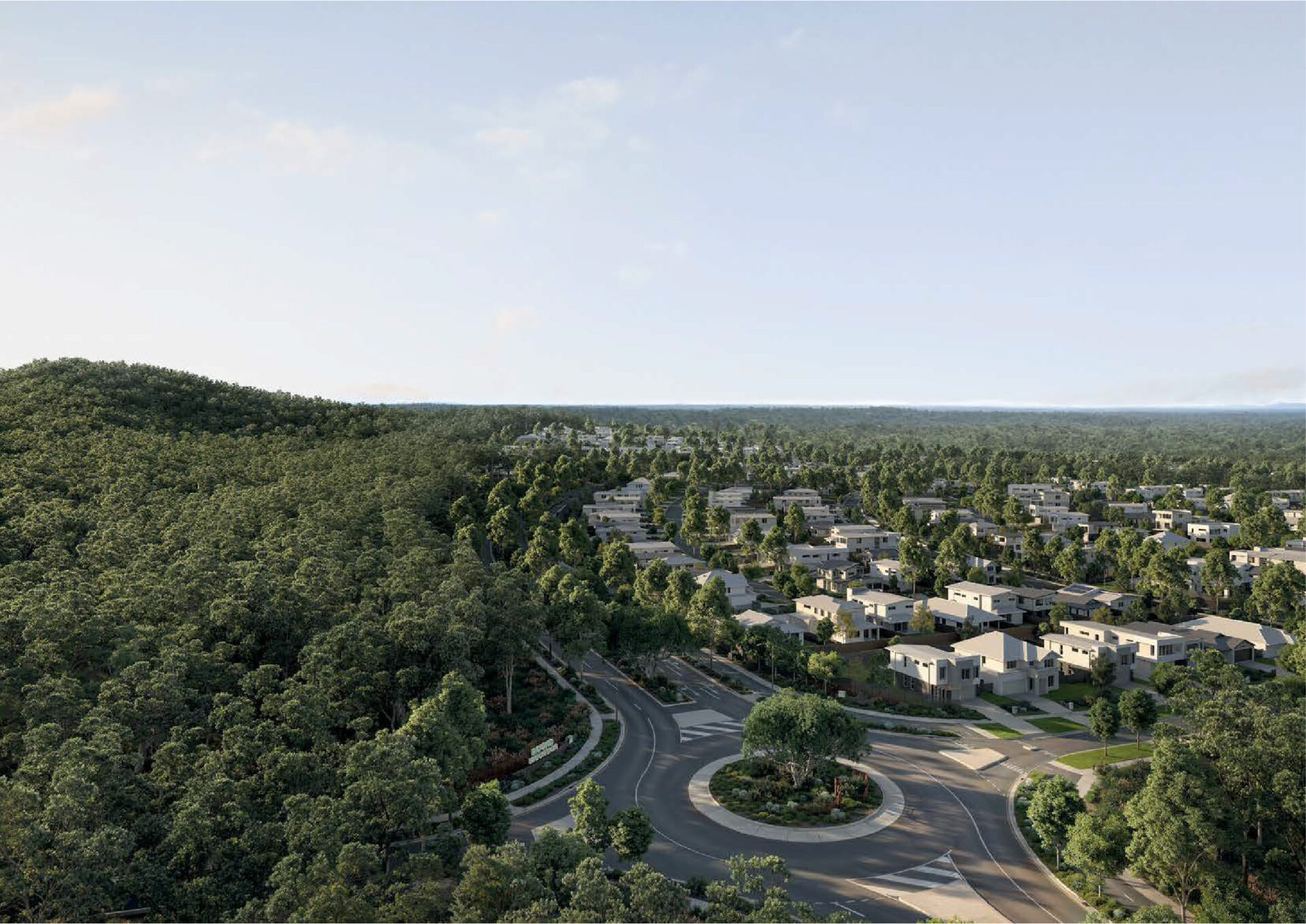
The intent of the landscape design at Round Mountain is to enhance the natural beauty of the local environment and increase biodiversity.
Landscape Design Principles
By applying these landscape requirements, your home will contribute to the high-quality residential landscape, which maximises the unique qualities of the Round Mountain community.
A well planned and sensitive approach to your landscaping is a critical component of the home design process. High-quality and mature landscaping adds value to your property and the community, improves your lifestyle and provides your home with shade and wind protection.
Embracing native plants has numerous benefits. Not only will it ensure your home fits well within its setting, the surrounding streetscapes and the bushland environment, but it provides habitat for native fauna, conserves water and reduces maintenance. We have supplied a list of native species to include in your landscaping design, specific to the design typology you choose to feature at your home. Refer to the typology pages for more detail on planting choices.
We have supplied a list of native species to include in your landscaping design, specific to the design typology you choose to feature at your home. Refer to the typology pages for more detail on planting choices.
In summary, the principles of the Landscape Design Guidelines are to create a landscaped front and back yard that is:
- Low maintenance with minimal turf in front yard.
- Drought tolerant.
- Contributes to biodiversity.
- Provides habitat and food for fauna such as insects, lizards and birds.
- Enhances street appeal.
To ensure all homes complete landscaping in accordance with the Design Guidelines, we require a covenant bond to be paid which will be refunded upon completion and establishment of your landscaping.
Alternative designs may be approved at the discretion of the DRP, providing they achieve the overall principles and intent of the Landscape Design Guideline.
General Landscape Recommendations
- For lots 10m wide and under, planted garden beds and turf must be provided with a minimum 25 percent site coverage of the available landscaping area on the primary street frontage.
- For lots over 10m wide, planted garden beds and turf must be provided with a minimum 40 percent site coverage of the available landscaping area on the primary street frontage.
- A minimum of one shade tree with a minimum 100 litre pot size or 1.8m in height, must be installed in the front garden. Mature trees provide layering to your landscape design and assists with integrating your new home into the existing environment.
- Garden beds are to be edged and finished with mulch. Suitable edging materials include concrete, aluminium, Corten or Galvanised steel, or masonry sleepers.
- Impermeable surfaces are limited to a maximum of 60 percent of the lot frontage this includes driveways, paving, and concrete paths.
- The installation of an irrigation system is highly recommended and will assist in ensuring your landscaping maintains a high level of presentation.
- Planting design should utilise plant hierarchies to optimise shade, screening, ventilation and security.
- Planting locations are to be determined with solar access and prevailing wind direction in mind.
- Planting of large trees in close proximity to retaining walls will not be permitted.
- In addition to the above, the following are the minimum planting requirements for your front yard.
Pre-Approved Landscape Designs
To assist with landscaping your new home, we have prepared our Landscape Guidelines, which includes four Landscape Designs with material and planting palettes for you to choose from.
These designs have been prepared by a qualified Landscape Architect and are pre-approved by the DRP. You can take one of these designs to a landscape designer who will custom design one of these palettes to your home.
Refer to the Landscape Guidelines section of this document for further information.
Landscaping Assessment and Bond Return
All planting of trees and other vegetation within a lot must be approved by the DRP.
Landscaping including fencing must be completed within 3 months of you moving into your home. Once your landscaping is completed, arrange for an inspection by our DRP who will assess and approve a partial refund of your covenant bond.
To ensure the integrity and establishment of your landscaping, $1000 of your covenant bond will be held for a period of 12 months following your Final Approval. After 12 months and once your landscaping has been confirmed as compliant and well established, the remaining bond will be promptly refunded to you.

Pre-Approved Front Yard Landscape Designs
The front yard frames your home and becomes part of a larger picture. One that elevates our shared sense of place and makes our community feel like home.
We invite you to curate your front yard in line with one of our four pre-approved landscape typologies. Each of our four typologies is a distinct style, designed to help you curate the colours, tones, planting, and materials that will define your home’s frontage.
- The Mountain – Strong, sculptural, and grounded in nature’s raw beauty. Think rugged stone, hardy plantings, and a sense of permanence.
- The Creek – Soft, flowing, and full of life. Curved lines, water-inspired features, and lush native plantings that invite birds and pollinators.
- The Parkland – Open, green, and welcoming. Shade trees, seasonal colour, and spaces that invite neighbours to stop and connect.
- The Urban – Sleek, modern, and confident. Clean lines, bold planting, and contemporary materials that make a statement.
When front yards go beyond turf, they do more than look good. A well designed front yard:
- Boosts biodiversity by creating habitat for wildlife.
- Cools our streets and helps combat the Urban Heat Island effect.
- Drives our vision for a green, sustainable, and future-ready community.
Your front yard is the gateway to your home, but it’s also part of something bigger. Every tree, every stone, every plant you choose adds to the collective beauty and identity of Round Mountain. Your front yard can be a source of pride and a contribution to the shared beauty of Round Mountain.
Use these guidelines to create a front yard that elevates your home’s facade, enriches the street, and welcomes you home every single day.
How to Use What We’ve Provided
Each of our four typologies is a distinct style, designed to help you curate the colours, tones, planting, and materials that will define your home’s frontage.
- Material Recommendations – A curated list of surfaces, finishes, and structural elements that bring your chosen typology to life.
- Character Palette – Colours, textures, and forms that capture the essence of your style.
- Sketch Perspective and Plan – Visual examples showing how your front yard could look, both from the street and from above, so you can picture the end result.
- Minimum Planting Standards – Clear benchmarks to ensure your front yard is functional and aligned with our community’s green vision.
- Planting Matrix – A practical guide to plant selection, organised by planting guides and biodiversity value so you can choose species that support local wildlife and pollinators.
By following these elements, you’ll have everything you need to design a front yard that:
- Reflects your personal style.
- Elevates the look and feel of your home’s façade.
- Contributes to a vibrant, biodiverse, and sustainable streetscape.
Think of this document as both inspiration and instruction. It’s here to help you dream big, make confident choices, and create a front yard that welcomes you home — while also making a lasting impact on the street and the community.
Urban Heat Island Effect
How Your Front Yard Can Help
When natural landscapes are replaced with hard surfaces like roads, driveways, and rooftops, those surfaces absorb and store heat during the day and release it at night. This creates what’s known as the Urban Heat Island effect – where built-up areas become noticeably hotter than surrounding natural environments.
In a new community, this effect can be amplified because much of the native vegetation has been cleared to make way for housing and infrastructure. Without trees and gardens, there’s less shade, less cooling from plant transpiration, and more heat radiating from hard surfaces.
Your front yard can be part of the solution.
By planting trees, shrubs, and groundcovers, you:
- Create shade that cools your home, footpaths, and the street.
- Reduce heat absorption by replacing hard surfaces with living greenery.
- Cool the air naturally through the moisture plants release.
- Lower energy use by reducing the need for air conditioning.
Every tree and garden bed at Round Mountain contributes to a cooler, more comfortable community. Together we can make a measurable difference.
Increasing Biodiversity
And Why It Matters
Biodiversity is the variety of living things in an environment – from plants and trees to birds, insects, and other wildlife. In a new community, the biodiversity of a place drops sharply because native habitats have been cleared to make room for housing and infrastructure. This loss can disrupt local ecosystems, reduce pollination, and make the area less resilient to environmental change.
By designing your front yard with a mix of plants that attract and support wildlife, you help rebuild that lost biodiversity.
This means:
- Food and shelter for native species – from nectar for bees to nesting spots for birds.
- Pollination support for gardens and surrounding landscapes.
- Healthier ecosystems that are more resilient to pests, disease, and climate extremes.
- A richer, more vibrant streetscape that feels alive and connected to nature.
In Round Mountain, every resident has the chance to help restore what was lost and to replace cleared landscapes with thriving, living spaces that support both people and nature.
Understanding the Planting Guides
Shade Lover
- Thrives in areas with little to no direct sunlight
- Ideal for planting under trees, beside tall shrubs, or in spots shaded by buildings
- Helps bring greenery and texture to spaces where sun-loving plants may struggle
- Performs best with plenty of direct sunlight – generally 6 or more hours per day
- Perfect for open garden beds, borders, and areas with minimal shade
- Often produces more flowers or stronger growth when given full sun
Sun Lover
- Performs best with plenty of direct sunlight — generally 6 or more hours per day.
- Perfect for open garden beds, borders, and areas with minimal shade.
- Often produces more flowers or stronger growth when given full sun.
Part Sun / Part Shade
- Adaptable to a mix of conditions – can handle some direct sun and some shade during the day
- Works well in gardens with dappled light or areas that change in sun exposure through the seasons
- Offers flexibility for planting in transitional spaces
Accent / Feature Plant
- Designed to stand out – often chosen for striking foliage, flowers, or form
- Best used sparingly to create focal points, rather than in large groups
- Adds personality and visual interest to your front yard design
Understanding the Biodiversity Value
Bird Attracting
- Provides food (nectar, seeds, fruit) or shelter for birds
- Can help bring more bird life into your garden, adding movement and song to the streetscape
Bee Attracting
- Offers nectar or pollen for bees and other pollinating insects
- Supports pollination in your garden and the wider community, helping plants and crops thrive
Butterfly Attracting
- Provides nectar for adult butterflies and may offer host plants for caterpillars
- Encourages colourful butterfly activity and supports their life cycle
Flowering
- Produces seasonal or year-round blooms
- Adds colour, texture, and visual interest to your front yard, while often supporting pollinators
Fruiting
- Produces edible or ornamental fruit
- Can provide food for people, birds, and other wildlife
Habitat Foliage
- Offers shelter, nesting places, or protective cover for wildlife
- Creates safe spaces for small animals, birds, and beneficial insects
Typology 01. The Mountain
Choosing the Mountain typology for your front yard is a statement of connection to place. By referencing the character of Round Mountain, you’re grounding your home in a story that is both local and timeless. This approach celebrates the rugged beauty and enduring strength of the mountain.
Boulders anchor the space with a sense of permanence, while native grasses bring movement, texture and seasonal change. Sandstone and earthy tones echo the colours of the surrounding landscape, creating an authentic and harmonious palette. This is a landscape that is bold in form, yet relaxed in spirit.
By embracing this typology, your front yard becomes a living tribute to the landscape that shapes your community. It invites neighbours and visitors to experience the sense of place and belonging that Round Mountain inspires, while offering a low‑maintenance, climate‑responsive design that will thrive for years to come.


Typology 01. The Mountain — Planting Standards & Material Guide


Typology 01. The Mountain — Planting Matrix


Typology 02. The Creek
Choosing the Creek typology for your front yard is an opportunity to create a space that feels alive and refreshing. By referencing the character of Flagstone Creek, you’re bringing the gentle flow, layered textures and sensory richness of the waterway into your everyday environment.
The Creek typology is informal yet immersive. Stone and pebbles form the foundation, echoing the creek bed’s natural patterns, while native grasses soften the edges and sway with the breeze. Cool, watery tones create a calming visual palette, complemented by dappled shade that invites you to pause and linger. The design’s layered textures offer a sensory experience that changes with the seasons and the light.
By embracing this approach, your front yard becomes a sanctuary that cools, soothes and engages. It’s a design that encourages interaction,and reflects the essence of Flagstone Creek.


Typology 02. The Creek — Planting Standards & Material Guide


Typology 02. The Creek — Planting Matrix


Typology 03. The Parkland
These parks are places where people gather, relax and enjoy the outdoors. By drawing inspiration from them, you can bring that same sense of order, beauty and year‑round enjoyment right to your doorstep.
The Parkland typology is formal in its structure yet warm in its invitation. Clustered plantings create visual rhythm and balance, while manicured lawns offer open, usable space that feels fresh and cared for. Shade trees provide comfort and shelter, encouraging time spent outdoors, while evergreen planting ensures the garden remains lush and vibrant throughout the year. Seasonal pops of colour add moments of delight and variety, marking the passage of time in a subtle, uplifting way.
By embracing this approach, your front yard becomes an extension of the parkland lifestyle. It’s a design that speaks of care, community and enduring appeal, offering a space that will remain beautiful and functional in every season. Choosing the Parkland typology for your front yard is about creating a space that feels welcoming, refined and connected to the identity of Round Mountain’s parks.


Typology 03. The Parkland — Planting Standards & Material Guide


Typology 03. The Parkland — Planting Matrix


Typology 04. The Urban
Choosing the Urban typology for your front yard is about embracing a modern aesthetic that speaks to the character of today’s connected, forward‑looking communities. It’s a style that values precision, clarity and balance which creates a space that feels both polished and welcoming. By drawing on the principles of contemporary design, you can craft a front yard that makes a confident statement.
The Urban typology is defined by its clean lines and structured planting, where every element has purpose and place. Manicured lawns provide a crisp, green foundation, while pavers and cool‑toned hardscapes create a sense of order and flow. Soft groundcovers add texture and contrast, softening the geometry without losing the design’s clarity. Deep green planting offers a lush, sophisticated backdrop, ensuring the space feels vibrant yet composed throughout the year.
By choosing this approach, your front yard becomes a reflection of modern community life – streamlined, elegant and easy to maintain. It’s a space that complements contemporary architecture, enhances street appeal and offers a sense of calm through its order and simplicity. The Urban typology creates a setting that feels current and considered.


Typology 04. The Urban — Planting Standards & Material Guide


Typology 04. The Urban — Planting Matrix


The Backyard Design Guide
Landscape Design of Your Backyard
Every resident has the opportunity to make a meaningful contribution. Planting along lot fences not only provides privacy and softens boundaries, it also creates vital habitat and visual continuity. Including at least one medium‑to‑large shade tree will bring cooling comfort in summer, while a couple of smaller feature trees can add seasonal beauty and character.
Carrying a green, biodiverse landscape across the entire lot is a commitment to creating a healthier, more resilient community. By embracing this approach, we can help counter the effects of the Urban Heat Island and slow the loss of biodiversity in our growing neighbourhoods.
Even with minimal space, the backyard can be designed in many creative ways to extend the living area of your home. Clever use of space can transform the backyard into a versatile retreat. It becomes more a place for social gatherings with friends, quiet moments of relaxation, and family activities that spill seamlessly from indoors to out. With thoughtful design, even the most modest backyard can feel generous, functional and deeply connected to the way you live. We have provided a montage of ideas for creative ways you can elevate your outdoor living, and encourage you to invest in the landscaping of your home.
Together, these choices create a living network of greenery across the community that supports wildlife, cools our streets, and enriches the daily experience of everyone who calls Round Mountain home.

Creative Ideas for Small Spaces.
Integrated Seating
Transform your backyard into a true extension of your home. Thoughtfully built into your garden, integrated seating creates inviting spaces to gather with friends and family, or to simply unwind in the comfort of your own private retreat. Integrated seating maximises space and ensures your backyard is always ready for both lively conversation and the quiet moments.

Vertical Gardens
Transform unused walls and fences into vibrant, living features without taking up valuable floor space, creating a lush, layered look that makes the area feel larger and more inviting. Vertical gardens can improve air quality, provide shade and cooling, and even grow herbs or edibles for the kitchen. They’re a smart, space‑saving solution that brings life, texture and personality to compact outdoor spaces.

Layered Planting
Adds depth, texture and visual interest to a small backyard, making it feel larger and more dynamic. By combining low groundcovers, mid‑height shrubs and taller feature plants, you create a sense of structure and flow that draws the eye through the space. This approach enhances beauty year‑round and supports biodiversity. Turning every view into a rich, living composition.

The Corner Lot Design Guide
Landscape Design of the Corner Lot
A Corner lot offers a unique opportunity to create something truly special. With more space for landscaping, it becomes a canvas for greenery that frames your home and enriches the entire streetscape. The planting along the street provides a natural screen to the side fence and retaining, flowing effortlessly into your front yard landscaping.
This continuity of planting creates a seamless, green frontage that enhances both the beauty and biodiversity of the street. It’s a chance to contribute to a living streetscape – one that feels vibrant, connected and welcoming.
The generous side yard of a Corner lot is an asset that should be embraced. It offers the perfect setting for additional landscaping and extra tree coverage, bringing shade, habitat and year‑round visual appeal.
The typical Corner lot plan showcases how this space can be maximised – pairing a thoughtfully designed backyard with one of the four distinctive front yard typologies, to create a home that is as inspiring from the street as it is from within.
The side yard offers unique opportunities that standard lots can’t match. We have provided some ideas for making the most of your Corner lot. When paired with the creative ideas for your backyard – the Corner lot offers an attractive opportunity to maximise outdoor living.

Creative Ideas for Side Yard
Feature Tree Avenue
With a sense of presence and elegance, a row of trees draws the eye, and frames the home beautifully. While also providing shade that cools the home and footpaths, improving air quality, and creating habitat for local wildlife. Trees become a defining feature of the home, enhancing street appeal and long‑term value.

Kitchen Garden
Transforms the space into a productive and engaging part of the home. By growing herbs, vegetables and fruit trees, you can enjoy fresh, seasonal produce, encouraging healthy living. Beyond its aesthetic charm, a kitchen garden offers year‑round value – providing nourishment, fostering biodiversity, and creating a purposeful outdoor space that blends seamlessly with the home’s lifestyle.

Pergola with Climbing Plants
Transform your side yard into a shaded, inviting outdoor room that blends structure with nature. Flowering varieties bring fragrance and visual appeal, edible climbers offer fresh produce, and native species support local biodiversity. Positioned along the side yard, this feature enhances privacy and cools the space in summer.
